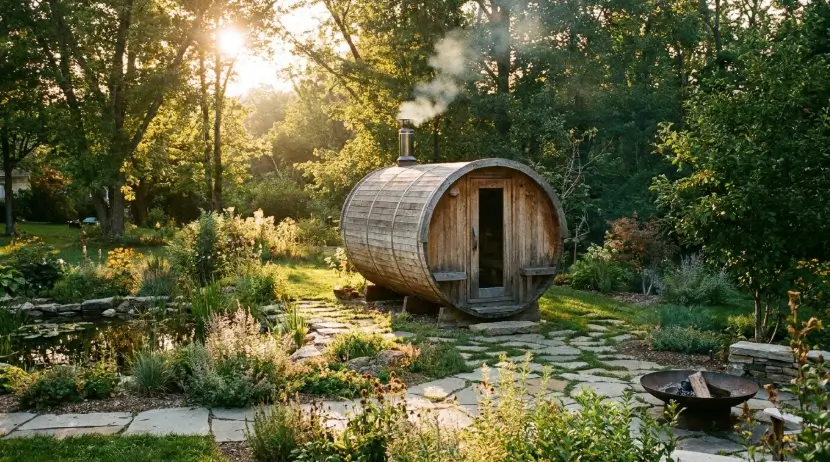
Installing a barrel sauna on a tight budget still requires three things done correctly: a properly rated electrical circuit sized to the heater (often 240 volts, sometimes 120 volts for smaller heaters), a level and well-drained foundation such as gravel and pressure-treated skids, and manufacturer-specified clearance from any combustible wall or fence, typically 18 to 24 inches at minimum. Skipping or shortcutting any of the three creates a genuine safety issue, not just a cosmetic one, which makes this one part of the project where cutting cost the wrong way is not worth the savings.
What Electrical Work Actually Costs on a Budget Install?
Most barrel sauna heaters above 4.5 to 6 kilowatts require a dedicated 240-volt circuit run from the home’s panel. If the panel already has spare breaker capacity and the run is short, a licensed electrician might complete the work for $400 to $700. Longer outdoor runs, trenching for buried cable, or a panel that needs additional capacity can push that to $1,000 to $1,500. A smaller heater under roughly 4.5 kilowatts sometimes runs on a standard 120-volt circuit, which cuts electrical cost substantially, though it also means a longer heat-up time and a somewhat less capable heater overall. Get a firm quote before ordering the barrel, since this line item swings the total budget more than any other single decision besides the unit’s own size.
What Kind of Foundation Actually Meets Code and Budget Both?
A barrel sauna needs a level, stable, well-drained base, not a full poured slab. Two or three pressure-treated 4×6 skids set on 4 to 6 inches of compacted gravel is a standard, inexpensive approach that most jurisdictions accept for a structure of this size and weight. Materials for a DIY gravel and skid foundation typically run under $200. A poured concrete pad is a valid upgrade for anyone who wants one, generally $500 to $1,500 done professionally, but it is not required specifically for a barrel’s curved floor, which sits on runners rather than needing a flush slab underneath.
How Much Clearance Does the Barrel Actually Need?
Manufacturer manuals specify minimum clearance from combustible structures, most commonly 18 to 24 inches on all sides, though the exact figure depends on the specific heater and shell. This clearance exists for two reasons: heat radiating off the barrel’s exterior during a session, and the airflow the unit needs to draw combustion or ventilation air properly. Placing a barrel tight against a wooden fence or a house’s siding to save yard space is a common budget-driven mistake that violates both the manufacturer’s stated clearance and, in many areas, local fire code. Always confirm the specific heater’s clearance requirement rather than assuming a generic number applies.
Do You Need a Permit, and Does Skipping One Actually Save Money?
Permit requirements vary by municipality, and it is common for the structure itself to be exempt as a small accessory building while the electrical circuit still requires a permit and inspection. Skipping a required electrical permit to save the fee is a false economy: an uninspected circuit can complicate a future home sale, void insurance coverage in a fire, and in some areas exposes the homeowner to a fine larger than the permit fee itself. A quick call to the local building department before scheduling the electrician usually resolves the question in a few minutes and avoids a costly surprise later. Keep a copy of the electrical permit and inspection sign-off with the sauna’s other paperwork, since a future buyer’s home inspector or an insurance adjuster may ask for it years down the line, and a missing record at that point is harder to fix than the original phone call would have been.
Is DIY Install Realistic for a Budget-Focused Buyer?
Leveling the pad, setting skids, and assembling or positioning the barrel itself is realistic for most people with basic tools and a second set of hands, since barrels typically arrive mostly or fully assembled. The electrical run is the one part that should not be DIY unless the person doing it is a licensed electrician, regardless of how much it would save. Standards bodies like the National Fire Protection Association publish general guidance on electrical safety around heat-producing appliances, and following a licensed installer’s work is the most reliable way to meet that standard without guessing.
Where Can Buyers Compare Full Install Requirements Before Ordering?
Reviewing a few manufacturers’ installation manuals before buying gives a realistic sense of clearance figures, recommended heater wattage per barrel size, and foundation guidance before money changes hands. It is worth taking the time to check what is in stock among a few sellers, since specs and clearance details are laid out differently from one listing to the next. Manuals that are vague on clearance or electrical requirements are a sign the manufacturer expects a professional installer to sort out the details on-site, which can turn into an unplanned cost once installation actually begins. It also helps to ask the seller directly whether they have installation photos or a checklist from past customers, since real-world install notes often flag site issues, like a downspout draining toward the planned pad or a gas meter sitting inside the clearance zone, that a generic manual does not anticipate.
Does the Research Change Anything About How a Barrel Should Be Installed?
The available research on sauna bathing addresses health outcomes tied to regular use, not installation method, so a well-installed budget barrel offers the same potential association with cardiovascular benefits as an expensive one. A 2018 review in Mayo Clinic Proceedings and a systematic review in Evidence-Based Complementary and Alternative Medicine both describe these associations as built on consistent, long-term use, which depends on the sauna being safe, comfortable, and easy to use regularly, not on how much the installation cost. A correctly installed budget unit that gets used four times a week supports that pattern better than an expensive one installed with shortcuts that make it unpleasant or unsafe to use.
Frequently Asked Questions
Can I wire a barrel sauna heater myself to save money? A heater under about 4.5 kilowatts sometimes runs on a standard 120-volt outlet, which a homeowner may be able to handle if local code allows it. Anything requiring a dedicated 240-volt circuit should be installed by a licensed electrician.
What clearance does a barrel sauna need from a fence or house wall? Most manufacturers specify at least 18 to 24 inches of clearance from combustible structures, though local fire code and the heater’s manual may require more.
Does a barrel sauna need a building permit? It depends on the municipality. Many jurisdictions require a permit for the dedicated electrical circuit even when the structure itself is exempt.
Is a gravel pad enough of a foundation for a barrel sauna? Yes, for most residential installs. A compacted, level gravel base under pressure-treated skids meets the drainage and stability a barrel needs.
References
- Cardiovascular and Other Health Benefits of Sauna Bathing: A Review of the Evidence, Mayo Clinic Proceedings, 2018
- Clinical Effects of Regular Dry Sauna Bathing: A Systematic Review, Evidence-Based Complementary and Alternative Medicine, 2018
- Benefits and risks of sauna bathing, The American Journal of Medicine, 2001
- National Fire Protection Association, electrical safety standards
By Priya Whitcombe