EV charging infrastructure hinges on charger capability, grid supply, and battery state, with control algorithms and thermal limits defining real throughput. Chargers differ by power level, connector, and efficiency, while site type—public, workplace, or home—shapes access and reliability. Financing, incentives, and policy impact deployment timelines and ROI signals. Planning balances capital versus operating costs with grid constraints and reliability. The interplay of software control, scalability, and resilience suggests evolving standards will determine practical convenience and fairness as adoption grows.
How EV Charging Speeds Work in Practice
EV charging speeds in practice depend on a combination of charger capabilities, electrical supply limits, and the battery’s state of charge as well as its chemistry.
The analysis centers on how charging speed implications arise from power availability, thermal management, and voltage thresholds.
Connector compatibility constrains hardware choices, while control algorithms modulate current.
Efficiency, safety margins, and interoperability shape practical throughput.
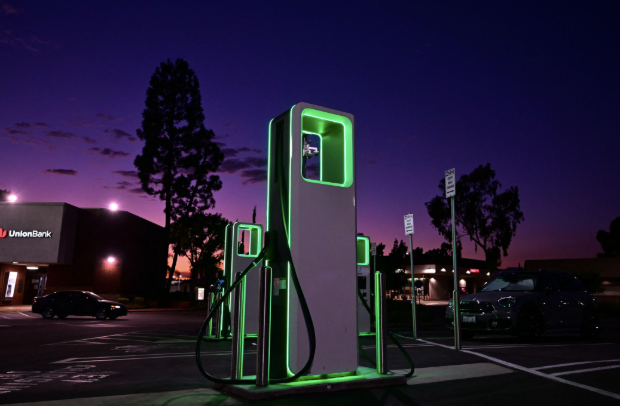
Where Chargers Live: a Map of Public, Workplace, and Home Charging
Public, workplace, and home charging networks collectively form the spatial framework for electric-vehicle (EV) adoption, delineating access, reliability, and load characteristics across usage contexts.
This mapping analyzes public charging density, workplace availability, and residential access, linking utilization patterns to grid capacity constraints.
The structure reveals how charging locations influence reliability, fairness, and grid-demand management within evolving electricity markets and infrastructure planning.
Who Pays and How Incentives Accelerate Deployment
Strategic financing and targeted incentives shape the pace and distribution of electric-vehicle (EV) charging deployment by aligning stakeholder costs with anticipated benefits and by addressing market failures.
Payer incentives monetize externalities, reduce capital barriers, and create predictable ROI signals.
Deployment drivers include policy objectives, grid integration, and vendor competition, which collectively optimize site selection, throughput, and long-term asset utilization.
Planning Your Charging Experience: Costs, Reliability, and Future Trends
Planning a charging experience requires a rigorous assessment of costs, reliability, and evolving technology trends to ensure predictable performance and total cost of ownership.
The analysis focuses on charging economics, capital versus operating expenses, and demand-response potential.
Reliability metrics, grid readiness, and resilience inform site design, lifecycle planning, and maintenance.
Future trends emphasize software, interoperability, and scalable infrastructure for freedom and dependable electrification.
Frequently Asked Questions
How Do EV Chargers Handle Outages and Redundancy?
Outage resilience is achieved through redundancy design and diversified power sources; chargers employ local energy storage, parallel electrical feeds, and failover switching. Critical components are APS/UPS-backed, with remote monitoring, automated reconfiguration, and routine testing to minimize downtime.
Are There Safety Concerns With High-Power DC Fast Charging?
Shockwaves ripple through the system; high-power dc fast charging presents safety concerns. The assessment focuses on fault tolerance, cooling efficiency, and energy storage integration to mitigate arcing, thermal runaway risk, and electrical isolation challenges for user autonomy.
What Maintenance Is Required for Home Charging Equipment?
Maintenance scheduling for home charging equipment focuses on routine inspections, protective earth continuity, and connector integrity; monitoring charging cycles reveals component wear, enclosure seals, and cable strain. Regular documentation supports risk mitigation, performance assurance, and user autonomy in maintenance decisions.
How Do Vehicle-To-Grid (V2G) Capabilities Work?
V2G economics hinges on bidirectional charging, enabling price arbitrage and ancillary services; studies show potential peak-shaving savings of up to 30% for utilities. Grid impact depends on aggregation, control algorithms, and vehicle availability.
See also: ETL vs ELT Processes
Can Charging Speeds Vary by Weather Conditions?
Yes, charging speeds can vary with weather. Charging efficiency declines as battery temperature deviates from optimum, while cold or hot conditions affect power delivery, thermal management, and voltage regulation, influencing overall charging efficiency and battery temperature management.
Conclusion
Conclusion (75 words, satirical, analytical):
In short, the grid whispers, “Charge on,” while chargers argue about kilowatts and firmware upgrades. Public, workplace, and home platforms pretend to be diverse ecosystems, yet all converge on data, tariffs, and thermal throttling. For planners, costs are sovereigns; reliability is a myth occasionally appeased by software dashboards. The future promises scalable, resilient infrastructure—if engineers don’t insist on recalibrating every week. Meanwhile, users optimistically pretend the map is a straight line to green, one plug at a time.