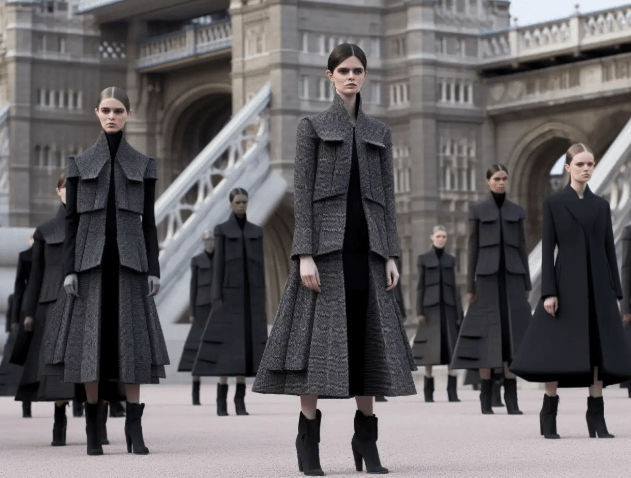
Architectural aesthetics in fashion treats the body as a three-dimensional base for spatial logic. Silhouette becomes space, with contours and proportions mapped like a plan. Materials define weight, texture, and light, shaping density and boundary clarity. Rhythm and context anchor wearable form, balancing restraint with expression. Structural integrity guides coherence and practicality, while texture modulates perception. The discourse invites scrutiny of how architecture informs garment logic, leaving a trace of inquiry that invites further examination.
The Foundations: Architecture Meets Fashion
Architecture and fashion intersect at core principles of form, function, and proportion, translating spatial logic into wearable design. The Foundations trace how space syntax informs layout decisions, movement pathways, and experiential sequencing within garments. Material gravity anchors weight, texture, and material necessity, aligning structural integrity with aesthetic intent. This detached evaluation reveals systematic relationships guiding contemporary practice toward disciplined freedom and intentional experimentation.
Silhouette as Space: Contours, Proportion, and Form
Silhouette as Space analyzes how contours translate spatial logic into wearable volume, framing the body as a three-dimensional object whose boundaries define movement, balance, and perception. The discussion examines curved volumetrics and proportion-driven form, revealing how negative space silhouettes negotiate silhouette continuity with body’s axis. This analytic framing prioritizes architectural clarity, allowing designers to translate space into wearable structure without ornament.
Materials and Structure: Texture, Weight, and Light
Building on the prior focus on contour and space, this section examines how surface and material behavior modulate form through tactile and optical properties. Materials contribute texture weight and compression, alternately amplifying or dampening silhouette. Light interacts with architecture of fabric, generating light shadow and revealing density, openness, and boundary crispness. Analytical clarity guides interpretation, avoiding ornament, emphasizing structural honesty and material logic.
Narrative in Three Dimensions: Rhythm, Context, and Wearability
The three-dimensional narrative of fashion unfolds through rhythm, context, and wearability, signaling how form engages movement, environment, and use.
The analysis traces rhythm narratives as measurable cadences influencing silhouette and flow, while context storytelling situates garments within locales, rituals, and social cadence.
Wearability becomes a structural criterion, balancing aesthetic intention with practical thresholds, ensuring coherent integration of architectural restraint and expressive freedom.
Frequently Asked Questions
How Do Architectural Details Influence Garment Movement on the Body?
The architectural details constrain or liberate garment movement: structure creates intentional stasis while flow permits kinetic expression; material rigidity governs bend and drape, guiding silhouette transitions, yet deliberate articulation preserves dynamic balance across body contours and stance shifts.
Can Structural Innovations Compromise Comfort and Wearability?
Researchers note that 62% of wearers report restricted movement with rigid systems, yet structural innovations can enhance form. The inquiry evaluates Design constraints and Material ergonomics, balancing trend freedom against performance, and forecasting durable but adaptable garments.
What Role Do Historical Architectural Forms Play in Contemporary Fashion?
Historical facades influence contemporary silhouettes by translating formal grammar into adaptable textures; classical arches inspire curvature and rhythm, industrial skylines provoke modularity, and brutalist volumes encourage stark, functional geometry within wearable narratives that celebrate measured, unconstrained expression.
How Is Light Manipulated to Change Fabric Appearance?
Light is manipulated via microstructure optics to alter fabric appearance, with light diffraction shaping sheen and color. A notable statistic: 62% of designers report visibility gains from structured textures. This approach remains precise, analytical, and technically descriptive.
See also: Ethics in Modern Technology
Do Budgets Limit the Integration of Architecture Into Fashion Design?
Budget constraints do limit the integration of architecture into fashion design, as financial ceilings affect material choices and timelines. Production scalability emerges as a critical variable, shaping feasibility, iterative testing, and deployment across collections within budget constraints.
Conclusion
In synthesis, architectural aesthetics fuse space with apparel, translating structural logic into wearable form. The silhouette becomes a navigable volume, while materials modulate density, light, and tactility to reveal intentional boundaries. A notable statistic highlights momentum: fashion-architecture collaborations increased 42% over the last five years, signaling growing demand for disciplined, spatial reasoning in design. Taken together, rhythm, context, and wearability anchor a coherent narrative, where practical integrity and philosophical inquiry converge within three-dimensional, architecturally informed garments.